
Joe
PowersportsList Assistant
Hi, I'm Joe!
Ask me about listings, events, businesses, or how the site works.
Published
March 23, 2026
Reading Time
5 min read
Motorcycle safety gear represents your primary defense against catastrophic injury. Unlike car occupants surrounded by airbags and crumple zones, riders face the pavement with only their protective equipment between them and serious harm. Understanding what modern safety gear offers, and why certain certifications matter, empowers you to make informed decisions that could literally save your life.
Your helmet is non-negotiable. The statistics are unambiguous: helmets reduce death risk by 37 percent and brain injury risk by 67 percent according to safety research. These aren't marginal improvements—they represent the difference between walking away and not walking away at all.
However, not all helmets are equal. The difference between a helmet meeting basic standards and one incorporating cutting-edge protection is substantial. Look for DOT certification as the baseline requirement in the United States. SNELL certification represents a more rigorous testing protocol and indicates a manufacturer's commitment to exceeding minimum standards.
For riders seeking maximum protection, examine certifications like ECE 22.06 (the European standard) and Snell 2025, the latest iteration of Snell's testing protocols. Some premium helmets pursue FIM homologation, which represents the highest level of certification available for motorcycle safety equipment. These certifications demand that helmets withstand impacts from specific angles at defined velocities, with strict tolerances for how much acceleration force reaches the wearer's head.
Advanced helmet construction now incorporates carbon fiber shells that distribute impact energy more effectively than traditional fiberglass. Rotational force reduction technology—sometimes called MIPS (Multi-Directional Impact Protection System) or similar systems—addresses the brain injuries that result from rotational acceleration during angled impacts. These technologies add cost but represent genuine innovation in protective capability.
Smart helmets represent the latest frontier in helmet technology. Integrated HUD (heads-up display) systems provide navigation and speed information without requiring you to look away from the road. Crash detection systems automatically alert emergency contacts or services if an accident is detected, potentially reducing response times to critical situations. As these technologies mature and costs decrease, integration into mainstream helmet designs will become increasingly common.
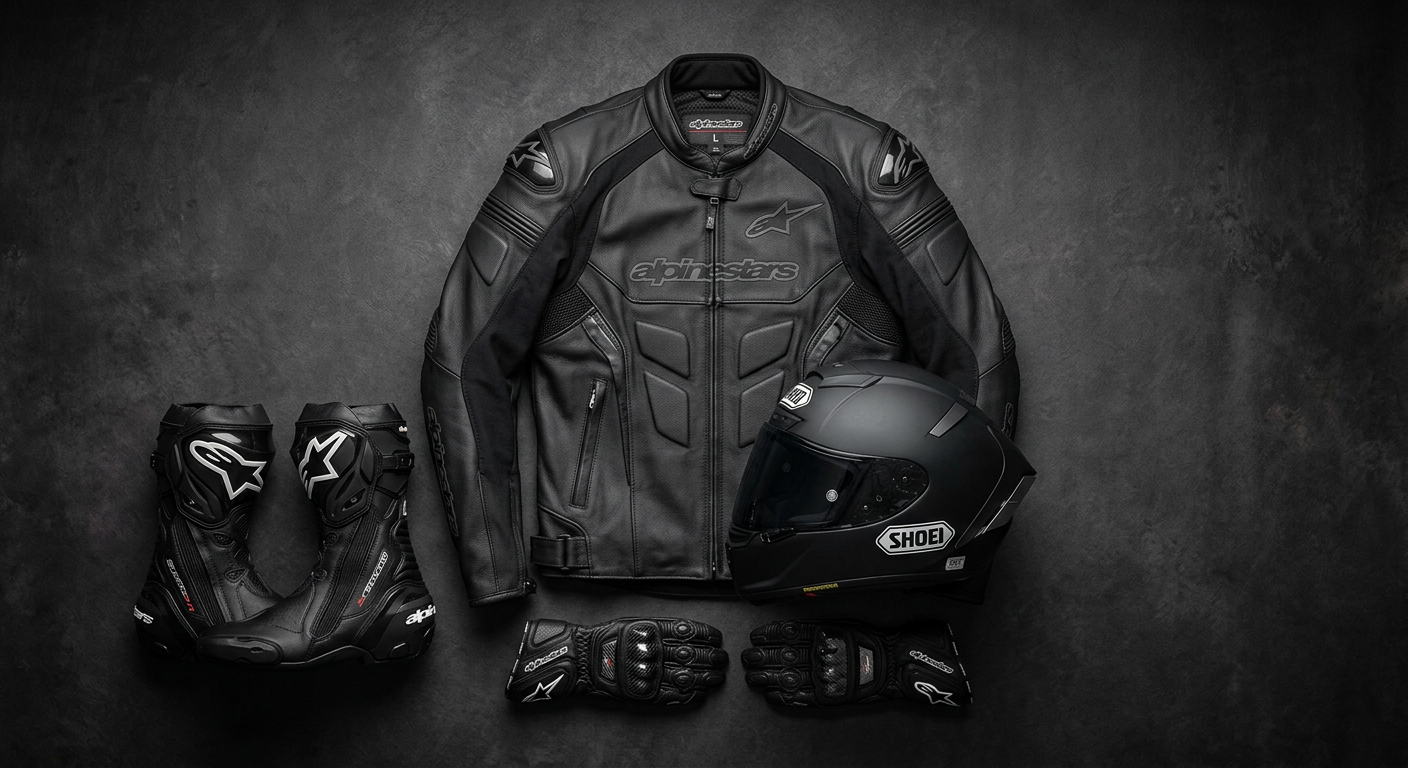
A quality motorcycle jacket protects your most critical upper body areas: shoulders, chest, ribs, and spine. Modern jackets combine several protective strategies into cohesive systems.
The outer shell typically uses Cordura or similar abrasion-resistant textiles. Leather remains a premium option for abrasion protection, but technical fabrics have narrowed the gap substantially. The critical distinction isn't leather versus textile—it's quality construction versus cost-cutting shortcuts. A premium textile jacket outperforms a cheap leather one.
Look for Kevlar layers in high-impact zones. Kevlar distributes impact energy across a larger area, reducing the concentrated forces that cause severe injuries. Many jackets incorporate CE-rated armor in the shoulders, elbows, and back. Don't settle for decorative armor that looks protective but fails to meet safety standards. Verify armor certifications match your needs.
The emerging category of airbag jackets deserves particular attention. These systems inflate on impact, distributing force across a much wider area than armor alone can achieve. While currently expensive and requiring compatible activation systems, airbag technology represents significant innovation in injury mitigation. As adoption increases and production scales, costs will inevitably decrease.
Your hands are among your first impact points. Beyond injury prevention, quality gloves help you maintain grip and control even when your hands are cold, wet, or fatigued.
Modern motorcycle gloves integrate touchscreen-compatible materials in the fingertips, eliminating the need to remove gloves for navigation or communication. Knuckle armor, reinforced palm areas, and wrist protection have become standard in quality gloves. Premium options incorporate carbon fiber knuckle protection that's lightweight yet incredibly strong.
Fit matters significantly with gloves. Too loose, and they'll shift during impacts. Too tight, and they'll restrict blood flow and cause fatigue during long rides. Spend time finding gloves that fit your hands properly, even if it requires trying on multiple pairs.
Wind noise above 55 miles per hour exceeds 90 decibels, the threshold where hearing damage becomes a concern during extended exposure. Many riders overlook this aspect of safety, but earplugs specifically designed for motorcycle use filter dangerous frequencies while preserving your ability to hear traffic and communication.
Reflective vests and jackets significantly increase your visibility during low-light conditions. A reflective layer catches vehicle headlights and projects that light back toward the driver, making you conspicuous even when directly in front of approaching vehicles. Modern reflective materials maintain their effectiveness for years without requiring frequent replacement.
Don't view safety gear as individual purchases. Think of them as a coordinated system where each component works with others to maximize protection. A premium helmet paired with poor jacket quality leaves your upper body vulnerable. Conversely, investment across multiple categories compounds your protection benefits.
Consider your typical riding conditions when selecting gear. Track day riders need different considerations than commuters. Off-road riders require different protection than street riders. Cold-weather riders face different challenges than those in temperate climates.
Budget constraints are real for most riders. Rather than buying cheaper versions of everything, prioritize the most critical areas: helmet and jacket. These receive the most impact during accidents. Once you've secured quality core protection, expand your system with gloves, boots, and pants that complete your coverage.
The 2026 market offers unprecedented variety in protective equipment. Smart materials, advanced certifications, and technology integration have never been more accessible. Your life literally depends on the gear you choose. View safety equipment as an investment in your future—one that might prove invaluable the very next time you ride.
Powersports Writer & Enthusiast
Published
March 23, 2026
Reading Time
5 min read